Estate cleanouts represent one of the most physically and emotionally demanding tasks a family can undertake. Whether you are managing a loved one’s passing, assisting parents with downsizing, or handling a property remotely, the sheer volume of items often feels paralyzing.
We have supported hundreds of families through this transition, and we know that the logistical burden is just as heavy as the emotional one.
Effective preparation is the only way to keep costs down and prevent family friction.
From our experience, the families who succeed are the ones who treat this like a project rather than a chore.
This guide outlines the exact timeline, sorting protocols, and value assessments you need to manage an estate cleanout efficiently.
Before You Begin: The Legal and Timeline Reality
Most families underestimate the time required to clear a home properly. Rushing often leads to the accidental disposal of financial documents or items with hidden value.
The Probate Constraint Before you remove a single item, verify your legal standing. In the United States, probate processes can take anywhere from 9 to 24 months depending on the state and the complexity of the estate. Executors have a fiduciary duty to secure assets. Removing items too early can sometimes create legal liability.
Recommended Strategic Timeline We advise using a phased approach to prevent burnout.
| Phase | Duration | Primary Focus |
|---|---|---|
| Assessment | Week 1-2 | Locate documents, secure the home, and identify high-value assets. |
| Sorting | Week 3-4 | Categorize items into keep, sell, and donate piles. |
| Distribution | Week 5 | Family members claim items; appraisers value antiques. |
| Clear Out | Week 6+ | Professional removal, estate sales, and final cleaning. |
Deadlines sometimes force a faster pace, such as a pending home sale or lease expiration. Intentional planning becomes even more critical in those high-pressure scenarios.
Step 1: Assemble Your Decision Team
Estate cleanouts are rarely successful as a solo endeavor. You need a team with clear roles to avoid decision fatigue.
Key Roles to Assign:
- The Executor: This person has the final legal authority on asset distribution.
- The Archivist: Someone designated to handle photos, letters, and genealogy.
- The Project Manager: A family member who coordinates schedules and service providers.
- Third-Party Professionals: This includes estate sale managers, appraisers, and residential junk removal teams.
Establishing these roles early prevents the “too many cooks” problem. We have seen that disputes arise not from the items themselves, but from a lack of clarity on who decides what happens to them.

Step 2: The Documentation Walk-Through
Do not start packing boxes immediately. Your first action must be a comprehensive audit of the property for insurance and legal purposes.
The “Inventory First” Protocol:
- Video Documentation: Walk through every room with a smartphone recording in 4K resolution. Open drawers and closets while recording.
- Paperwork Hunt: Actively search for life insurance policies, deeds, and stock certificates.
- Hidden Assets Check: Look in common hiding spots like freezer compartments, taped under drawers, or inside book pages.
- Utility Assessment: Check the status of the water, gas, and electricity, which must remain on for the cleanout crew.
This documentation serves as your protection if a dispute arises later regarding the condition of the home or the existence of specific assets.
Step 3: Implement the Four-Category System
Decision fatigue sets in quickly when handling thousands of individual objects. We recommend setting up physical zones in the house corresponding to four distinct categories.
1. Keep
These are items with genuine sentimental value or practical use for specific family members.
- The Rule: If nobody claims it within a set timeframe (e.g., 7 days), it moves to the Sell or Donate category.
2. Sell
Identify items that have significant resale value.
- Financial Insight: Under IRS rules, inherited personal property usually receives a “step-up in basis” to the fair market value at the date of death. This minimizes capital gains taxes if you sell immediately.
- Market Reality: Know the difference between “old” and “valuable.” Mid-Century Modern furniture is currently in high demand, while heavy Victorian “brown furniture” has dropped significantly in value over the last decade.
3. Donate
These are usable items that do not have high resale value.
- Local Savannah Options: Goodwill, Habitat for Humanity ReStore, and specialized shelters.
- Pro Tip: Request a tax receipt for every drop-off. These deductions add up quickly on an estate tax return.
4. Remove
This category covers trash, broken items, and hazardous materials.
- Volume Warning: This pile will be larger than you expect. Most households contain 30% to 50% “junk” that cannot be sold or donated.
Step 4: Execute a Room-by-Room Strategy
Attempting to clear the entire house simultaneously is a recipe for anxiety.
The “Swiss Cheese” Method We suggest “poking holes” in the project by starting with the easiest tasks to build momentum.
- Start Here (Low Emotion): Bathrooms, laundry rooms, and kitchens. These rooms contain mostly functional items with little sentimental attachment.
- Move Here Next (Medium Emotion): Guest bedrooms, living rooms, and dining rooms.
- End Here (High Emotion): Master bedroom, personal offices, and storage areas like attics.
The Two-Hour Rule Set a timer for 120 minutes. Work intensely for that block, then force a 30-minute break. Emotional exhaustion leads to poor decisions, such as tossing valuable papers or keeping trash.
Step 5: Professional Valuation of Assets
It is critical to distinguish between sentimental value and market value.
Items Requiring Expert Appraisal:
- Fine Jewelry & Coins: Melt value for gold and silver is currently high, but numismatic value requires an expert eye.
- Firearms: Transferring ownership requires strict adherence to state and federal laws.
- Art & Antiques: Use resources like WorthPoint or 1stDibs to check realized auction prices before selling.
We frequently see families unknowingly discard valuable items. Conversely, we often see families pay to store “antiques” that are actually mass-produced reproductions with little value.
Step 6: Managing Personal Keepsakes
Photos and letters act as the biggest bottleneck in the cleanout process.
Strategies for Paper and Photos:
- Digitize First: Services like ScanCafe or Legacybox can digitize bulk photos. This allows every family member to have a copy without fighting over the original.
- The “Representative Item” Strategy: You do not need to keep every teacup to remember a grandmother. Keep one representative piece and photograph the rest before letting them go.
- Memory Books: Create a physical album for each sibling and discard the blurry or duplicate shots.
Do not review photos at the start of the day. We advise saving this task for the evening or a dedicated weekend, as it halts physical progress immediately.
Step 7: The Role of Professional Removal
Once the family has claimed their items and the valuable assets are sold, you will likely face a significant volume of remaining material.
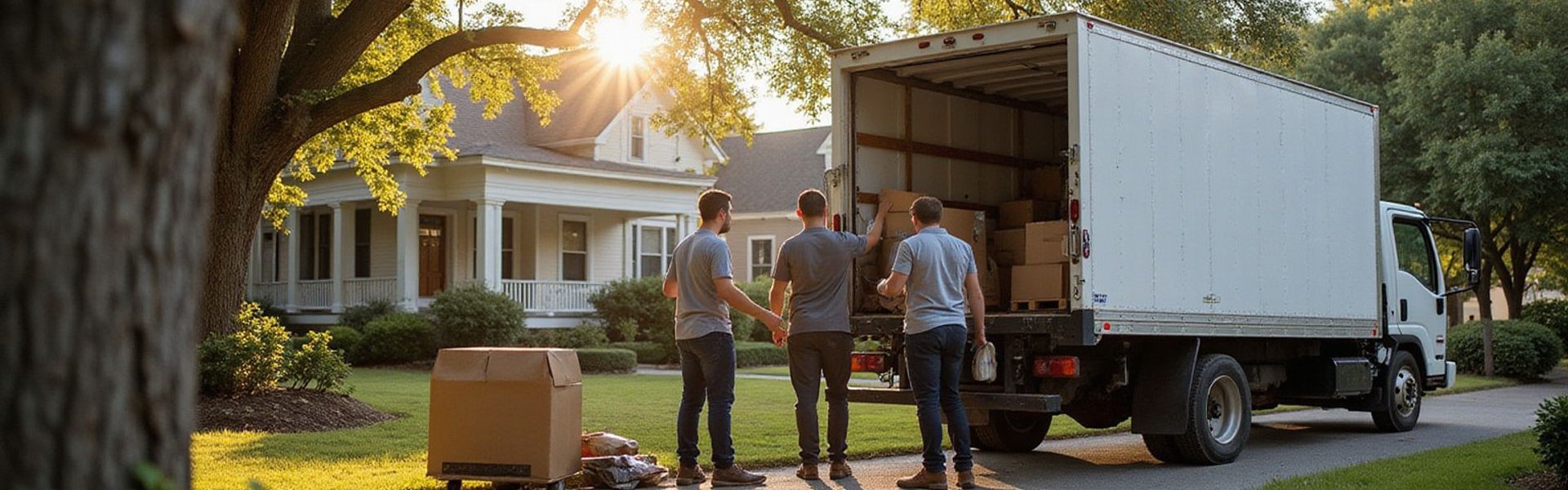
Why Hire Pros? Most municipal trash services will not take bulk furniture, construction debris, or large appliances.
Our Service Capability:
- Efficiency: We can clear a typical three-bedroom home in a single day, a task that takes families weeks.
- Donation Logistics: We handle the transport of donation-worthy items to local charities, saving you the rental truck fees.
- Eco-Friendly Disposal: We sort materials for recycling to minimize landfill impact.
Pricing for this service is generally volume-based. You pay for the amount of space your items take up in the truck, which provides cost certainty upfront.
Step 8: Final Prep for Sale
The property needs to be “broom swept” at a minimum, but a deeper clean usually yields a high Return on Investment (ROI).
Cleaning Tiers:
- Rental Turnover: Basic vacuuming, wiping down surfaces, and bathroom sanitation.
- Market Listing: Deep cleaning of carpets, window washing, and baseboard scrubbing.
- Repairs: Fix glaring holes in drywall or broken fixtures.
Buyers overestimate the cost of repairs. Presenting a clean, empty canvas helps them visualize their own life in the home rather than focusing on the previous owner’s maintenance deferrals.
Practical Insights from the Field
Our team has managed hundreds of these projects, and we have noticed consistent patterns in successful cleanouts.
Guilt is a Bad Inventory Manager Do not keep items solely because you feel guilty. Your loved one’s memory resides in your stories and shared experiences, not in a dusty storage unit.
Communication Prevents Conflict Keep all beneficiaries informed weekly. Transparency regarding what is being sold and donated reduces suspicion and hurt feelings.
Perfection is Impossible You will likely throw away something you should have kept, or keep something you should have thrown away. Accept this margin of error as part of the process.
How We Can Support You
At Coastal Junk Pros, we recognize that we are entering a personal space during a vulnerable time. Our approach combines efficiency with the respect your family deserves.
Our Cleanout Services Include:
- Complete property clearing (interior and exterior).
- Coordination with local donation centers.
- Same-day or next-day scheduling options.
- Transparent, all-inclusive pricing with no hidden dumping fees.
Contact us at (912) 555-0247 to discuss your specific needs. We are ready to handle the heavy lifting so you can focus on what matters most.