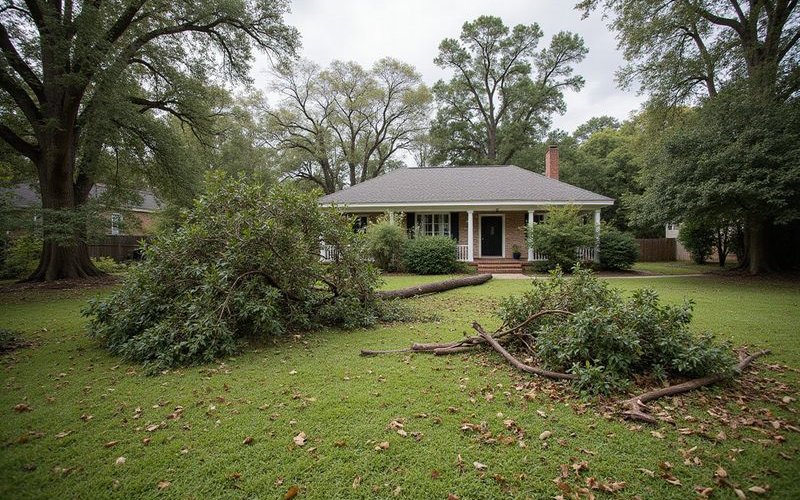
Living in the Coastal Empire usually means enjoying the breeze through the Live Oaks, but locals know the weather can turn quickly. That beautiful Spanish moss becomes heavy debris the moment a tropical system or severe thunderstorm rolls through.
You are likely looking at your yard right now and wondering where to even begin.
We have helped countless neighbors across Savannah dig out from everything from Hurricane Matthew to last summer’s pop-up storms.
The process is always manageable if you break it down into the right steps.
Here is the exact roadmap we use to handle the aftermath safely and efficiently.
Immediately After the Storm
Safety First
Patience is your most important tool in the first hour.
Wait for the official all-clear:
- Stay inside until the Chatham Emergency Management Agency (CEMA) confirms the storm has passed.
- Check for downed power lines before you take a single step onto your lawn.
- Keep a safe distance of at least 35 feet if you see a line down.
- Call Georgia Power immediately at 1-888-891-0938 to report electrical hazards.
Watch for hidden Lowcountry hazards:
- “Widowmakers”: These are large, broken branches hanging loosely in the canopy that can fall without warning.
- Displaced Wildlife: Storm surges and flooding often force Copperheads and Cottonmouths out of their usual hiding spots.
- Fire Ant Rafts: In flooded areas, fire ants form floating colonies that look like debris but are incredibly dangerous if touched.
- Electrified Water: Treat all standing water as if it is charged until you know power is cut.
Document everything before moving anything:
- Take wide-angle photos of the entire yard first.
- Capture close-ups of specific damage to the siding, roof, or fence.
- Record a video walkthrough describing what you see.
- Note the exact date and time the damage occurred for your insurance adjuster.
Assessing Your Property
Walk your property carefully to categorize the mess.
Separating the damage into categories helps you prioritize what needs a professional and what you can handle yourself.
Immediate Hazards (Handle First)
- Trees resting on your roof or siding.
- Debris blocking the main exit or driveway.
- Damaged fencing that compromises pool safety or lets pets escape.
- Any vegetation touching utility lines (do not touch this yourself).
Property Damage (Document for Insurance)
- Missing shingles or flashing on the roof.
- Shattered windows or torn screens.
- Dents in siding from flying debris.
- Impact damage to vehicles.
Yard Debris (Cleanup Priority)
- Fallen limbs and Spanish moss piles.
- Scattered leaves and palm fronds.
- Displaced lawn furniture or trash cans.
- Soil erosion near the foundation.
The Cleanup Process
Step 1: Clear Access Points
Start with the driveway and front walkway.
Emergency vehicles and utility trucks need clear access to your home before any other work begins.
Step 2: Remove Hazards from Structures
Carefully pull branches away from the foundation and windows.
Leaves and wet moss held against your home’s siding can trap moisture and invite mold growth within 48 hours in our humid climate.
Step 3: Gather and Sort Yard Debris
Savannah has specific rules for how trash must be separated.
Follow this sorting protocol:
- Vegetative Debris: Leaves, logs, plants, and tree branches.
- Construction & Demolition (C&D): Building materials, carpet, drywall, and fencing.
- Appliances/White Goods: Refrigerators, air conditioners, and water heaters.
Why this matters: If you mix these piles, the City of Savannah or debris haulers will often refuse to pick them up.
Step 4: Address Standing Water
Mosquitoes in Chatham County are aggressive and breed fast.
Drain birdbaths, planters, and tire swings immediately, and treat non-drainable pools with larvicide dunks if available.
What About Insurance?
Understanding your coverage is critical in a coastal region.
We often see homeowners confused by the “Named Storm Deductible” that applies in this area.
Coverage Breakdown
| Type of Damage | Typically Covered? | Crucial Context |
|---|---|---|
| Tree on House | Yes | Usually covers removal and home repairs. |
| Tree on Lawn | No | Most policies do not cover removal unless it blocks a driveway. |
| Wind Damage | Yes | Subject to a specific wind/hail deductible (often 2-5% of home value). |
| Flood Damage | No | Requires a separate FEMA or private flood policy. |
Insider tip: Take pictures of the debris before you cut it up. Some adjusters need to see the size of the tree to approve the claim amount.
City of Savannah Storm Debris Services
The City provides relief after major events, but there are strict limitations.
You need to know the rules to ensure your pile actually gets collected.
What they typically offer:
- Curbside pickup of strictly vegetative debris.
- Rotating pickup schedules (check the City of Savannah website or 311).
- Operation of the Bacon Park Transfer Station for resident drop-off.
What they require:
- The 4-Foot Rule: Keep piles away from hydrants, mailboxes, and power poles.
- Separation: Do not bag debris; loose piles at the curb are standard for storm trucks.
- Patience: Collection can take several weeks depending on the severity of the storm.
Limitations:
- They will not enter private property.
- They generally do not take commercial waste or large stumps.
- Debris mixed with household trash is usually skipped.
When to Call Professionals
Sometimes the job is too big for a rake and a chainsaw.
Consider professional debris removal in these scenarios:
The volume is overwhelming:
- The pile exceeds what fits in a standard pickup truck bed.
- You have heavy oak rounds that are dangerous to lift.
- Debris is spread over an acre or more.
Time is a factor:
- Your HOA is threatening fines for unkempt yards.
- You need to clear the driveway for contractors to repair the roof.
- Another storm system is tracking toward the coast.
Safety concerns:
- The tree is under high tension (a “spring pole”) and could snap back when cut.
- Work is required near power lines.
- You lack the proper protective gear like chaps and helmet.
Insurance is involved:
- You need an official invoice to get reimbursed.
- The carrier requires a licensed company to perform the removal.
- You want assurance that waste is disposed of legally at a landfill like Dean Forest Road.
What We Handle After Storms
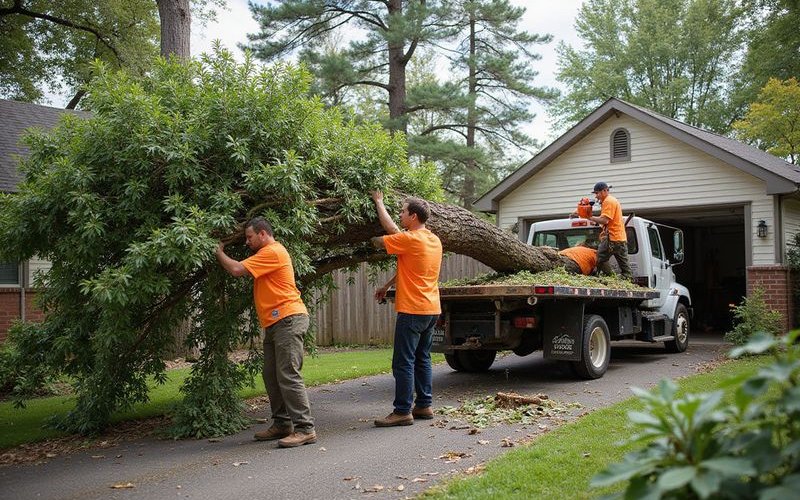
Coastal Junk Pros provides professional yard waste removal to help Savannah homeowners recover quickly after storms.
Our team is equipped to handle the heavy lifting that follows a major weather event.
Debris we remove:
- Fallen trees and heavy oak branches.
- Wet brush and vegetative piles.
- Storm-scattered items like trampolines or sheds.
- Broken fence sections and lattice.
- Water-damaged furniture and carpet.
What we provide:
- Speed: We typically mobilize within 24-48 hours after the winds die down.
- Full Service: You point to the mess, and we load it.
- Compliance: We separate materials to meet local disposal regulations.
- Documentation: We provide clear photos and invoices for your insurance claim.
Preparing for the Next Storm
Use the cleanup as a learning experience to harden your home.
Preventive Tree Maintenance
- Schedule an annual inspection with a certified arborist.
- Trim overhanging limbs that are close to your roofline.
- Remove dead pines that are prone to snapping in high winds.
Secure Outdoor Items
- Identify “projectiles” like patio umbrellas and light planters.
- Clear space in your garage or shed to store these items quickly.
- Install permanent anchors for heavy items that cannot be moved.
Know Your Resources
- Save the number for Chatham Emergency Management Agency (CEMA).
- Review your insurance declaration page to check your deductible.
- Keep a stash of heavy-duty trash bags and work gloves.
Storm Season in Savannah
Hurricane Season (June 1 - November 30):
- Peak Risk: mid-August through October is when Savannah is most vulnerable.
- Preparation: Have your supply kit ready by June 1st.
- Strategy: Know your flood zone and evacuation route via I-16 or Hwy 204.
Summer Thunderstorms:
- Risk: Sudden microbursts can cause isolated but severe tree damage.
- Frequency: Expect these almost daily in July and August.
- Warning: These storms pop up fast, often with less than 20 minutes of lead time.
Winter Storms:
- Risk: Ice accumulation on Live Oaks is rare but devastating due to the weight.
- Impact: These events often cause the most widespread power outages.
- Preparation: Have a backup heat source ready.
Need Storm Cleanup Help?
When the next storm hits Savannah, you don’t have to handle the cleanup alone.
Our crew is ready to help you get your property back to normal safely and quickly.
Call (912) 555-0247 or contact us online for fast storm debris removal service.